
... As the world swings from 'financialisation' to 'artificial intelligence', asks Ajit Balakrishnan.
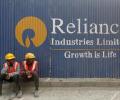
Institutional shareholders of Reliance Industries Limited (RIL) are expecting big-ticket announcements from the company, including timeline for listing of its telecom and retail subsidiaries. They expect this to unlock value in the company, which has seen a sharp fall in market valuation on Friday. This is due to windfall tax imposed by the Centre on refiners and oil producers.

Petroleum Minister Dharmendra Pradhan's wish to levy indirect tax on petrol unlikely to be taken up

There are several discussions going around in the e-health sector for consolidation with key players being PharmEasy, 1mg, Medlife and Netmeds. According to reports, Reliance Jio is in talks with Netmeds to acquire the latter.

The upcoming Budget gives Finance Minister Arun Jaitley a chance to let states boost spending.
Business Standard tracks pollution levels, goods ferried by the Indian Railways and consumer visits to various categories of places, in addition to power generation and traffic numbers to understand the fast-changing situation on the ground.

The bonds will likely be simultaneously launched in major financial centres such as London, Singapore, Hong Kong, New York for a term of no less than 20 years.

The deficit data was the latest in a run of positive signs for the sluggish domestic economy and could put India in a better position should the Fed start tapering, than in the summer when the rupee hit a record low.

The macroeconomic environment has changed dramatically for the better.

An official said that people in the government were aware of the benefits as well as the drawbacks of issuing overseas sovereign bonds, and there will be consultations with all stakeholders.
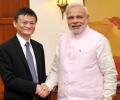
Alibaba's pervasive economic and social influence in China is seen as a threat to the authority of the Chinese Communist party, notes Shyam Saran.

Economic recovery is well under way in some advanced economies.
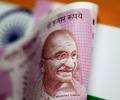
Fiscal deficit had soared to seven-year high of 4.6 per cent of GDP in 2019-20, mainly on account of poor revenue realisation which dipped further towards the close of March because of the lockdown.
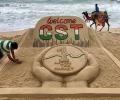
Mop up grows 10% y-o-y at Rs 1.05 trillion, almost equal to levels in February before a nationwide lockdown to contain the coronavirus pandemic

The Union government's fiscal deficit further widened to Rs 9.53 lakh crore, which is nearly 120 per cent of the annual budget estimate, at the end of October of the current financial year, according to official data released on Friday. The deficit widened mainly on account of poor revenue realisation. The lockdown imposed to curb spreading of coronavirus infections had significantly impacted business activities and in turn contributed to sluggish revenue realisation.
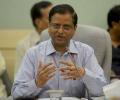
Owing to Finance Minister Nirmala Sitharaman being new to her role, a number of crucial announcements in the Budget bore Garg's imprint, especially the decision to borrow in overseas markets, reduce the fiscal deficit as a percentage of gross domestic product, and resort to off-Budget borrowing to meet that target, says Arup Roychoudury.

Modi said his critics were seeing slowdown in the last two quarters but were ignoring that the BJP government had brought down inflation from 10% to 2.5%.

Reacting to the announcement, MSME Minister Nitin Gadkari said clearing GST dues within 30 days will be highly beneficial for the MSME sector and will also be instrumental in increasing job opportunities.

The USIBC has encouraged a streamlined implementation of the GST.
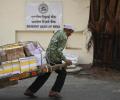
RBI said more monetary transmission to support growth continues to be critical.

The most immediate challenge for growth is the disruption of the global economy brought about by the Ukraine war and related sanctions, the Covid shutdowns in China and the rising tide of inflation, points out Nitin Desai.

What happens if China depreciates its currency. In that case, Chinese products will be cheaper and people will continue to buy their products: Abhijit Banerjee.

The economic costs now beginning to show up in the hard numbers are far worse than initial expectations.

The only real solution to the jobs crisis, whether in India or abroad, is to direct tech innovation towards job enhancing sectors, and disincentivising job-replacing ones, observes R Jagannathan.

According to sources, government officials have asked industry bodies and manufacturers to submit key concerns and requirements to begin manufacturing activity.

Chief Economic Adviser K V Subramanian on Monday said the overall impact of the second wave of COVID-19 on the country's economy is not likely to be large but cautioned about an uncertainty surrounding the pandemic going ahead. He further said that given the circumstances due to the pandemic, it is difficult to forecast if the country would achieve a double digit growth in the current fiscal. The Economic Survey 2020-21 released in January this year had projected GDP growth of 11 per cent during the current financial year ending March 2022.

'Since the NDA took office in 2014, and aggressively since 2019, the Union government seems hell bent on centralising all power and resources, only to fail spectacularly.'
India's economy is unlikely to see double-digit growth and may grow between 8 per cent and 9 per cent this fiscal year (2021-22, or FY22), against the estimated 11.5 per cent, according to leading economists and rating agencies. The downward revision of growth projections to as low as 10 per cent is mostly on account of stringency in restrictions by states, relatively slow vaccination pace, and the possibility of a third wave of the pandemic. However, they say the impact will not be as severe as the first wave, and expect the first quarter to see positive growth.

If the Puja as a brand can be marketed more effectively outside Bengal, even overseas, it might do wonders for the economy, says Atanu Biswas.

A higher opening in the domestic equity market also supported the rupee but dollar's gain against other currencies overseas limited the rise of domestic unit, forex dealers said.

How should one billion Indians, for whom deprivation has become an inescapable way of life, join us in celebrating 75 years of Independence? And where do we go from here? asks Kalyan Singhal.

According to a confidential government paper seen by Reuters, several states want to do away with obtaining landowners' consent altogether in some cases and to cut through red tape which they say holds up development.

The rate hike in the future is set to be 'calibrated and cautious'.

The central government is on track to meet its fiscal deficit target of 6.4 per cent of the GDP for 2022-23 on the back of strong growth in revenue collections, the World Bank said in its India Development Update on Tuesday. High nominal GDP growth in the first quarter supported strong growth in revenue collection, especially Goods and Services Tax (GST), despite tax cuts on fuel. Notwithstanding an increase in spending due to expanded fertilizer subsidies and food subsidies for vulnerable households in response to the commodity price shock, the government is on track to meet its FY22/23 fiscal deficit target of 6.4 per cent of GDP and the general government deficit is projected to decline to 9.6 per cent from 10.3 per cent in FY21/22 and 13.3 per cent in FY20/21.

Union Budget had projected the fiscal deficit at Rs 5.56 lakh crore.

'The most important priority for the next 25 years should be to strengthen our democracy so that it is supportive of social harmony, and to not just respect but to take pride in the diversity of Indian society in terms of the variety of languages, religion and religious practices and social norms,' explains Nitin Desai.
It, however, lags other states on crucial parameters such as health care and rural poverty.
'The biggest risk to the Indian markets from a 12-18-month view is that the current government does not get re-elected, or loses in a way that is not represented at all in the next central government.'

'Even before the outbreak of the flu, it had become clear that the tax revenue numbers for 2019-2020 were overestimated,' observes A K Bhattacharya.
The coming elections seem a tough battleground for the BJP in the wake of anti-incumbency, Patidar and Dalit agitations and implementation of the GST.
